Ward Krancel
A man saw a white squirrel
Climbing up a tree
And marveled at its strangeness
How did it come to be

He’d only ever seen before
Shades of red or gray
But the question had no answer
So he went upon his way

Soon thereafter in the woods
He spied a squirrel all black
Were all the animals changing
Had the world begun to crack

When next he saw the white squirrel
Sitting on a branch
He asked about its color
Why is it you don’t match

A curse was put upon me
The creature did reply
Have you seen the black squirrel
Your eyes cannot deny

I am I but also she
First one and then the next
White is fair and black is foul
And that is how I’m hexed

But one day he saw white and black
Both in a berry brier
The white squirrel laughed and ran away
The white squirrel was a liar
#
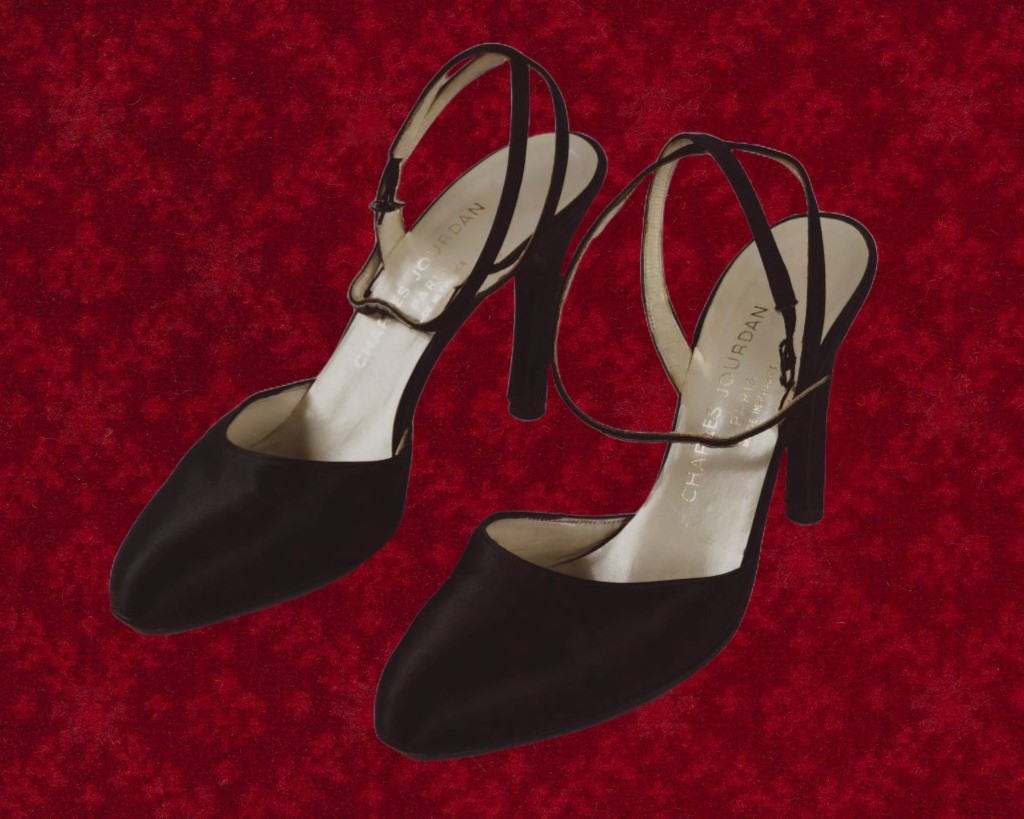
Skipping along the sidewalk, humming to herself, a girl turned into the alley behind Chestnut Street. She slipped a bag off her shoulders, loosened the drawstring at its top, and pulled out a pair of women’s shoes, black velvet pumps. Placing them on a cement parking block she continued down the alleyway, leaving the shoes behind.
#
Pinned down by thick layers of hypnopompic fog and maybe blankets, Omer heard the baby crying. Next to him Molly began to stir, but he managed to say, “I’ll go look. It’s not feeding time yet.” She rolled over and settled back in as he finished freeing himself from the covers, slipped his feet to the floor, and went to see what was the matter.
Diaper still dry. The vigorous complaint quieted when Omer lifted Elizabeth out of her crib, patting her back. He softly began a ditty his grandmother used to sing.
Two ducks on a pond
Two eyes in your head
They float around in circles
Two lips for a smile
The teeth in your mouth
A log with sunning turtles
The tune was an old waltz, and in that she made them up as she went along, the verses were endless. Silly gestures had always accompanied the performance, but Omer wasn’t able to get his eyes to roll in opposite directions to make the ducks the way his grandmother could. Humming the song, he bounced Beth on his shoulder until she fell asleep.
#
Rebounding on its spring, the back door of the bar slammed shut behind a young couple. “You’re right, those are good burgers,” he said.
On the way back to the car, she snaked her arm around his waist and gave him a bump with her hip. “I don’t feel like going home yet.” Laughing, she slipped away when he tried to kiss her neck. “Hey, look at this,” she said, picking up a pair of black shoes.
“I wouldn’t touch that—hobo junk. I bet they stink.”
“This isn’t junk. Do you know how much shoes like this cost?” she said, bringing them closer to her eyes.
“Then why would anybody leave them here?”
“Who knows? Who cares?” She sat on the curb, unlaced her sneakers, and slipped the beautiful evening shoes onto her feet. They fit perfectly.
“You’re nuts, you know that?” With legs extended, the young woman admired the shoes then stood and twirled on her toes. “Whatever. Don’t blame me if you get athlete’s foot.”
In a few minutes, they were walking on top of the levee. It was late, and they had the night to themselves. This time when he tried to kiss her, she let his lips graze her ear but again twisted away, dancing down the path.
“Sophie, where are you going?” he called as she receded into the darkness.
Warm, humid air enveloping her skin, it occurred to her she wanted to go swimming. At the bottom of the rocky bank, a margin of sand edged the river. Somehow keeping her footing in the fancy shoes, Sophie was soon standing on the narrow beach, stripping off her t‑shirt and skirt and setting them on top of the beautiful shoes.
But when she plunged in, shocking cold and a powerful current seized her. Thoughtless panic propelling her flailing and kicking for shore, she managed to pull herself onto the sand, gasping for breath.
“Sophie, where are you?” Noah hollered, worry entering his voice.
“I’m here.” Returning to her clothes, she quickly pulled them on.
Noah came sliding down the bank. “Don’t run off like that,” he said relieved. “You’re all wet. Did you go skinny dipping? Hell, I missed it.”
He was a few feet above her on the slope. “Help me up.” Before reaching for his hand, she retrieved the black velvet shoes.
#
Omer had always been an early riser, so he usually opened. Molly didn’t like mornings, a strange disposition for the owner of a coffee shop, but Mchie always got in by the commuter rush. His wife appeared at the door from the flat, his daughter in her arms. Molly set Beth down in her playpen, safe in a nook behind the end of the counter. “Take a break, papa.”
Mid‑morning was the best time to squeeze in a walk, and he ambled up the block, entering the town square park, a bronze Civil War soldier with chin whiskers and bayonet standing sentry at the entrance. The path cut diagonally, circling around a gazebo at the park’s center before exiting at the far corner.
The old movie theater stood across the next street. Rumor had it there was a new owner who was fixing it up, and the glass doors at its front were covered on the inside with paper. Omer tried to peek through at an edge, but the interior was dark.
A residential neighborhood stood adjacent the town center, one of his favorite routes. Some houses here dated back to the Nineteenth Century. Many were clad in pale local brick, once the town’s biggest industry, clay dug from pits at the foot of the bluff fired in kilns and shipped downriver to growing cities.
In a few blocks, he came to a bench beside a pond. A pair of trumpeter swans had taken up residency that spring and could be seen building their nest and gliding majestically around the pool. It had been the talk of the neighborhood. The cackle of blackbirds declaring their territory filled reeds along the water’s edge.
A bird much nearer to him called, “Conk‑la‑ree! Conk‑la—cough—excuse me.” Omer spotted it a few yards away, perched on the lip of a recycling bin. “Ahem, that’s better. We have a problem,” the bird resumed. “She’s baking us in pies! That must be it. If it’s poison, where are the bodies?” The bird cocked its head, one beady eye fixed on the troll. “Conk‑la‑ree!” It fluttered its red‑banded wings, hopping left and right on the edge of the bin.
“What makes you say ‘We’ have a problem?”
“Conk! It might be us now, but it could be you soon enough. Who will defend the law and what must be done when it’s broken? Who answers the call?” Omer would have liked to ask the bird more, but it flew away over the tops of the cattails calling, “Baking us in pies! Conk‑la‑ree!”
The walk back home passed without notice. The bell above the door breaking his reverie, he found himself back at the coffee shop. Molly was with customers, so he took a seat in a booth. He’d been sitting there awhile, lost in thought, when he noticed Mickey standing at his shoulder.
“What’s up, Omer? Anybody home?”
“Hi, Mchie. Just gathering wool.”
“What’s that mean?”
“Don’t really know, people just say it. Must be about sheep.”
She eyed him skeptically.
“You know, you can call me Mickey if you want, like everyone else does.”
“I never thought to ask you, Mchie. Where’d you get that pretty name?”
“It’s from some old radio dude my mom and dad liked, Benji Mchie. At least they didn’t name me Benjamin. You want coffee?”
“Sure.”
She went behind the counter, returning with a mug.
“Do you believe in witches, Mchie?”
“You mean like potions and spells? My aunties a Wiccan, and I don’t much believe in her.”
“My grandmother was what people today might call a Wiccan. She knew about medicinal plants and preserved folklore, but she wasn’t a witch.”
Mickey slid into the booth, opposite him. “Maybe I do believe in witches. Maybe I am one,” she smirked. “But what’s all this about?”
He was silent a moment. “You’re not a witch, I’d know. But what if I told you I’m looking for one?”
“You’re serious?”
“I’m not sure, but I want to keep trouble away from Elizabeth and Molly.”
“I’d die before I let anyone hurt them,” she said evenly.
“I know.”
#
The next day, Omer asked Molly if he could borrow Mickey for an hour.
“Should be okay. What’s up?”
“I thought I’d swing by and see Ida and then introduce Mickey to Ted,” he said with a wink. They’d been having issues with their restaurant supply vendor. The old man had retired and moved to Arizona, leaving the son in over his head.
“I get it, but don’t be a matchmaker,” she warned him with a grimace.
“I assure you my motives are purely selfish.”
“You’re shellfish?”
He caught himself before reiterating.
In the playpen Beth conducted some sort of meeting with her toys, babbling at them ardently, all lined up in a row. Nearby at the sugar and cream station, Mickey stocked napkins and stir sticks. “Would you mind helping me with something? I told Molly.”
#
Mist filling the air, Mickey popped up an umbrella. They soon reached the neighborhood of proud old houses, light drizzle freshening the lawns.
“Why the field trip, bossman?”
“Molly’s the boss. It’s her business.”
“True, but don’t give me any poor husband bull. You’re the luckiest man I know.”
“That’s a factual statement,” he replied. “I thought I’d introduce you to someone, but let me do the talking.”
She cocked an eyebrow. “So mysterious lately.”
A wrought iron fence guarded an old Victorian clad in straw‑colored brick, a turret with conical roof projecting at one corner, it’s dark slates a witch’s hat atop all. Omer opened the gate. On the porch he spun a brass knob set into the center of a dark green door, and from inside a bell chimed.
Presently, the door swung open, and a voice came from within. “Welcome.” A bent old woman preceded them down a wainscoting‑lined hallway, a stair with heavy mahogany banister marching up one side. She turned into a white‑painted kitchen, a big window over the sink letting in light, a green Formica table speckled like a bird’s egg at the room’s center. “Sit, the tea’s almost ready.” Their hostess—tiny, even if she hadn’t been stooped—had her thick white hair gathered in an intricately knotted bun, a straw sun hat sitting back on her shoulders, held by a string. Pouring fragrant tea from a silver pot into three China cups, she said, “It’s my own recipe. I hope you like it.”
Mickey blew on the surface of the honey‑colored liquid. “Mmm, that’s delicious.”
“Miss Ida, this is my friend, Mchie, that I told you about. Mchie, this is Ida Wilcox.”
After a few minutes of chit chat and town gossip, punctuated by sips of tea, the old woman said, “Please join me in the garden.”
They exited the kitchen, out to the hall and the back door. Mickey wasn’t prepared for what she saw. The backyard was enclosed by a tall fence, every inch of earth taken up by plants. It was beautiful, with flowers and exuberant greenery, but not an ornamental or formal garden, more like an organic farm with beds of herbs, rows of bushes, and vines twining poles.
Patches of blue peaked through thinning clouds, the shower over. Ida Wilcox took Mickey by the hand, pointing out various things as they threaded their way between the rows. “This is polypody—” like a small fern. “This is comfrey—” broad leaf with a flowering stalk. They proceeded around the enclosing wall, the old woman maintaining a constant patter, until returning to where they’d started. “Will you come and learn? Omer tells me it’s important. And besides, I need someone to help with packing and shipping.”
“Packing and shipping?”
“I send seeds and dried plants all over the world. You know, on the internet.”
Mickey wasn’t sure what to say—she didn’t like being manipulated—but looking around the amazing garden, something inside her fell into place. “If you teach me how to make that tea, I’ll come. But what’s this all about?”
Without answering, Miss Ida turned and entered the house, leading them back to the entryway. “Come as many mornings as you can. I’ll let Omer figure out the details. Just come through, I’ll be in the garden,” she finished, leaving them standing on the porch.
Back on the sidewalk, Omer said, “I have someone else for you to meet, a young man who’s underwater and giving me a headache.” That didn’t explain anything, and Mickey was getting a bit of a headache herself.
#
When Noah called, Sophie didn’t pick up, and when they did talk she was spacy and distracted. But he really liked her, so he kept trying. She seemed happy about her new job at the movie theater. Everybody in town was looking forward to the opening, and he was glad she’d found something she wanted to do.
When he got off work, Noah drove downtown and parked near the old cinema. There was a side door off the alley, with a buzzer, and he pressed it a couple times. After a minute he heard something scrape on the other side of the door. There was a peep hole in the center of it, and he had the sensation someone was looking at him. He heard the scraping sound again, the door swung in, and the kid was there on the other side. She had pulled up a step stool to see through the eye hole.
“What do you want, Noah?”
“Shouldn’t you be at soccer practice or something? Is Sophie here?”
The girl, Belinda, scowled at him but wheeled around yelling, “Sophie, your boyfriends here!”
Ducking through a musty curtain, he entered the lobby. Little sunlight penetrated the paper over the front doors, but he didn’t know where the light switches were, so he sat down in the gloom, on a grimy bench built into the wall, and waited. Footsteps came pounding from the auditorium. Sophie appeared, dressed in jeans and a sweatshirt, and she came over and sat down beside him. He put a hand on her thigh, and after a moment, she placed one of hers on top. It was cold.
“How’s it going? Gonna be ready for opening night?”
“Hi, Noah. Where’ve you been?” She seemed surprised, as if just noticing him.
He didn’t know what to make of that. “Do you want to get something to eat after you get off?”
“Not hungry. Maybe Belinda will get us pizza or something later.”
“Later? You’re working too hard. You need sleep, too.”
She turned her head toward him, a wan smile on her face. “There’s so much to do.” Removing his hand from her leg, she stood up. “I’ve got to get back.”
As she turned away her shoes clicked together, and he saw she had on the black pumps from the alley. “Why are you wearing those at work?”
Sophy spun back toward him. “Don’t bug me! Okay?”
Wanting to tell her how worried he was, Noah stood up, but she was already halfway down the corridor, swaying in her high heels like a fashion model. “I’ll call you,” he said. “Maybe we could go out Friday night or something.” Turning the corner toward the auditoriums, she disappeared from sight.
“You should leave now.”
He jumped, not having noticed the girl come up beside him. “Where’s your mom and dad? You shouldn’t be here by yourself.”
“It’s okay. I have Sophie.” Noah shook his head; she was a weird kid. Exiting the way he’d come, he walked back to his car.
#
Hearing a commotion, the fight call of mobbing crows, Omer looked up from his book. A bench in the square makes a good observation post, if you know how to be inconspicuous. The first harsh alarm came from behind him. To his left he heard another battle cry a bit farther off—the thing about crows is there’s never just one. Black streaks converged from every direction. If they got their enemy to the ground, hawk or owl, it was doomed.
Trying to spot the source of the clamor, Omer noticed a girl coming down the sidewalk. She entered the park, on the path to the gazebo. Climbing its steps and crossing to the bulletin board on the far side, she shrugged off her book bag and pulled a sheet of paper from it, holding something in her other hand. Omer heard the ca‑chunk of staples popping into wood.
Coming from the gazebo, she approached the troll’s bench. He knew what was walking toward him, the thing he’d been hunting. As the girl drew near, Omer said, “I see you, hag.” She stopped short. “You clothe yourself in a child’s body, but that’s not really you.”
She appeared a girl of nine or ten years, her long dark hair pulled back in a ponytail, dressed in black tights, white tennis shoes, and a pink windbreaker.
“I understand deception, but why make yourself so young? It must take a great deal of effort. Is it that much easier to hide as a child? Now that I’ve found you, though, I won’t let go. Tell you what, if you pack up and leave, maybe I’ll let you.”
Scrutinizing him like a bug she’d just noticed on her sleeve, she said, “So you see me. What of it? And you sit there defenseless, caveman, without a whiff of magic. Why is that? Have you lost it?” Closing her eyes she began a sing‑song rhyme.
If you act like a human
And do what they say
You may become
As powerless as they
Go away fool
I think I’ll stay
As the girl strode off Omer called, “Think on it, hag! So much less trouble to just leave town.” Crows began flying past him, lighting on branches and advancing again. It was the witch they pursued, keeping their distance but dogging her, angry and threatening.
#
Molly woke up early, so Omer took a turn at sleeping in. After showering and dressing, he started his commute down the back stairs. Opening the door at the bottom, something wonderful met his nose, mint and rose hips mingling with the smell of fresh coffee. A carafe of complimentary tea, a new promotion, rested on a side table near the door, adding its aroma to the room. He poured himself a cup, went behind the counter and gave Molly a kiss, and they talked business a couple minutes. Omer would start his shift around ten and go to closing.
After breakfast he headed out the door for his morning constitutional. Where the sidewalk met the levee, cement stairs climbed the bank to a paved bike path on top. River on one side and town on the other, he made his way downstream to where another set of steps led off the barrier. When he got to the bottom, he spotted a flyer on a streetlight pole.
Grand Reopening
Historic State Movie Theater
October Twenty Fourth
Nine O’clock Show
The Wizard of Oz
Free Admission and Refreshments
Omer ripped the flyer off the pole, crumpling it up and stuffing it into his pocket. He couldn’t find all of them, and he couldn’t stop ads from being run in the newspaper or people telling each other about it, but neither could he walk by one of these pieces of bait without removing it. In a few blocks he turned onto Fourth Street, nearing the town square park.
He seated himself on a bench with a good view across the street. The theater had once been a small town’s version of a movie palace, faced in sandstone, with an Art Deco marquee. There had originally been a single auditorium with one large screen, but years ago it had been split into smaller rooms so several films could be shown at the same time. And then it ceased to operate altogether. But the building still evoked something of what it must have been like in its heyday, retaining a certain drama.
The advertised reopening was approaching, but besides the paper taped over the glass doors, Omer couldn’t see any difference in the place, patches of black mildew blotting the façade and broken bulbs on the marquee. Raised voices caught his attention, and a young man came out the front. He was shouting back at someone out of view in the doorway, “What’s going on? I try to talk to you, but you won’t listen.”
“Just go, Noah!” A slim arm extended into the light, hand grasping the door and pulling it shut. The young man—early twenties, shaggy hair and leather jacket—crossed the street, not looking left or right, head down as though it were raining.
As he passed by, Omer stood up. “Excuse me—”
“I don’t have any money, but good luck.”
“Please, we need to help her.”
The young man stopped. “What do you know about Sophie?” he said suspiciously.
“Something happened a while back that changed her. It was when she met that girl. You know there’s something wrong, but I doubt you know what it is.”
“Is this some kind of scam? Are you working together?”
“My name’s Omer. I’ve lived around here a long time.” He extended his hand. “If we don’t help your friend soon, she may die.”
His shoulders slouching, anger deflated, the young man took Omer’s hand and said, “I don’t get any of this. But how do you know Sophy?”
“She doesn’t know me, but I know what’s happening to her. It’s that girl. She isn’t what she seems, and she’s dangerous.” Noah’s face showed confusion. “There’s still time to help Sophy. I work at the coffee shop on the next block. Will you come and talk and have a cup of tea? It’s free.” Taking him by the elbow, Omer guided the young man down the sidewalk.
#
The twenty fourth of October finally arrived, fallen leaves scuttling about in the twilight as Omer unlocked the garage door at the back of the building and pulled it up, revealing a shiny aluminum food cart attached to a bicycle. He mounted the saddle, flipped on the lights, and eased the unusual conveyance into the alley, taking it easy. In five minutes, he bumped the cart over the curb, steering it toward a bench across the street from the theater. Turning off the running lights, he switched on the programmable display.
Hot Tea and Cider
Free
On the bench he’d pulled up next to, Omer waited. He saw what the witch wanted people to see, the Art Deco theater in its past glory. Violet tubes curved around the barrel‑shaped marquis, returning back down and cutting horizontally along the length of the building. At the top, spelled out in white neon, gleamed the letters S T A T E. But beneath the glamour of her illusion, the dingy, unrestored building remained, broken light bulbs still dotting the sign.
Before joining the line, many people stopped for a hot drink. He’d just been chatting with a couple from the senior’s high‑rise when someone came up behind him.
“I can take it from here, honey.”
“What are you doing? Where’s Mickey?”
“You really thought I hadn’t notice what’s been going on? Mickey is babysitting Elizabeth,” Molly said, pity on her face.
Omer knew when he was beat. “Tea, my love?”
“I’ll have cider.” He pushed the black plastic lever on the insulated thermos. Taking a sip from her paper cup, eyeing him over its rim, she said, “This is infused with herbs Mickey’s been growing with Ida Wilcox. It’s in the tea you’ve been giving away at the store.”
“Only a fool would try matching wits with my wife, that’s what I tell everyone.”
She somehow managed to smile and scowl at the same time.
Doors to the theater opened, and people began filtering in. From their bench, hot cups warming their fingers, Omer and Molly surveyed the scene. When everyone had entered, a dark silhouette approached through the park. “I’m ready, sir.”
“Looks like the cavalry’s arrived.” Molly gave Omer a kiss on the cheek. “I’ll be right here if you need me.” Standing up he nodded to the young man and started across the street.
In the unattended lobby, set out for intermission, platters of confections covered the concession counter. Noah held back as Omer examined the treats, muffled sounds of the movie coming from the auditorium. A small red box stuck out from a nearby wall, a short metal bar attached to its side by a chain. Omer picked up the bar, smashed the glass covering the case, reached in, and pulled the fire alarm.
Clanging bells filling the building, people began streaming into the lobby, a note of panic in the air. As the audience poured onto the sidewalk, a door behind the concession area opened, and the girl stepped down the last few treads from the projection room above, the young woman trailing behind.
Omer met the girl as she came around the counter. “The Wizard of Oz … A little on the nose, maybe?”
“My favorite movies are always ones where the hero dies at the end.”
He lifted a cookie, wrinkling his nose. “Something off in this batch,” he said, dropping it into a wastebasket and brushing his hands with a napkin.
The girl glared at him. “I suppose you think you’re clever, caveman.”
“I’ve always preferred the name troll because that’s what my grandmother called me. You should have met my grandmother. You wouldn’t have liked her.”
“This means nothing, fool. You have no power over me.”
“Perhaps not, but I did find you.”
Someone backed in through the doors, carrying something in front. Turning toward them, Ida Wilcox stood with a plastic bucket in one hand and a small broom in the other. “You needed something cleaned up?”
“Thank you, Ida. Right on time.” The old woman dipped broom—on closer inspection more of a bundle of twigs—into bucket, sprinkling drops of water about. As she advanced, the scent of root beer accompanied her into the lobby.
The girl recoiled like a cat confronted with a squirt bottle. She spun around, stomping away toward the auditorium. “Come along, Sophie!” she hissed.
“This is it. Be brave. She’ll fight you,” the troll said, stepping in front of the young woman and blocking her path. Noah grabbed her arms from behind, and she did fight, trying to scratch and turning her head violently to bite him. He plopped onto the floor with Sophie in his lap, crisscrossing his arms around her, grasping her wrists.
The girl strode back toward them, but Miss Wilcox kept coming, shaking drops of scented water from her bundle of twigs. Omer knelt in front of Sophie’s flailing feet and grasped one of the black high‑heeled shoes. When he wrenched it off, she cried in rage. He took the second one and pulled it from her other foot. She cried out again, this time more in anguish than anger. The witch paced back and forth in front of her adversary, but with an exasperated screech she turned and disappeared around the corner of the hallway.
Klaxons inside the theater had ceased, but sirens howled in the distance. “Time we were leaving.” They exited out the front, the young woman wracked with sobs but no longer fighting. Outside and away from the entrance, Omer told the young man, “Get your friend a hot drink, and give her your coat.” Noah huddled Sophie over to the park, his arm around her shoulders, holding her up.
At the street corner, Omer said, “I owe you one, Ida.”
“Don’t be silly.” She patted his arm. “I owe you for bringing Mickey to me.”
“I guess we’ll just have to owe each other.” A police car arrived and a fire engine and then another police car. “Can I take your pail?” he shouted over the din. She handed it to him, and taking his arm, they navigated the crosswalk together.
When they reached the other side, she said, “I’d better go have a look at her.” Sitting on the bench, Noah’s arm still around her, Sophie sipped from a paper cup. “Hold out your drink, girl.” Her eyes were bleary, but she complied. The wisewoman took a small bottle from her coat pocket, uncapped it, and poured. “You too, boy.” After adding a measure to his cup, she said to Omer and Molly, “And both of you get some cider and hold it out.”
Omer glanced at his wife. “We’re okay, Ida. We don’t need any more of your potion.”
“It’s brandy, dummy. And get me one while you’re at it.”
Firemen and police tramped in and out of the theater. Onlookers soon became customers, and Omer thought to himself, maybe there’s a business model in pulling fire alarms and selling hot drinks on a chilly night.
Omer knelt before the young woman, mascara streaking her face. “There’s one last thing,” he said to her gently. But turning to Noah he added, “Keep that arm around her, son.” After digging through a drawer on the cart, Omer walked into the park, to the nearest barbecue grill. Squirting them with lighter fluid, he set fire to the black shoes. Back on the bench, Sophie moaned and recommenced weeping.
#
The alarm woke Omer with a start. After splashing cold water on his face and getting dressed, he descended to the shop below. At a table near the back, Molly sat staring at spreadsheets on her laptop. When he approached the counter, he saw Mickey crouched behind it, where large silver bags of roasted coffee were stored.
“Cappuccino, please.”
“Sure, bossman.” Mickey replied, looking up. “There’s a good breakfast tamale today. You want one?” He nodded and floated over to an empty booth, a bit punchy from lack of sleep.
After their ordeal they’d all gathered at the coffee shop, Mickey peppering them with questions, jealous at having been left behind. When everyone calmed down a bit, she drove them all home. Molly had gone upstairs with Beth, but Omer still felt too jazzed to sleep, so he decided to return the rented beverage cart.
Once again bringing the odd vehicle out of the garage, Omer switched on the running lights and started up the street. As he peddled past the movie theater—dark now, everyone gone home—he felt none of the presence of the witch. In a few more blocks, he turned onto the frontage road beside the highway and soon pulled into the parking lot of their restaurant distributor. Sliding from the saddle, he flipped off the lights and walked to the building, placing the keys in a box by the door. Strolling back through deserted streets, all had been quiet and peaceful.
Omer tasted his coffee, trying to clear the cobwebs. Two women were sitting in the next booth, and he heard one say, “I hope the fire didn’t do too much damage. The theater was so beautiful.”
“You’re nuts, Josephine. The place was a dump,” the other replied. When they departed, he recognized them as regulars and had noticed the second woman drinking the complimentary tea the last few weeks.
The tamale—stuffed with peppers and chorizo and topped with crema—was heaven. “So I still have a few questions.” Mickey took the seat across from him. “If that girl is a witch, and Ida helped you drive her off, is Ida a witch?”
Omer finished his cappuccino, setting the cup in its white saucer. “The habit of conflating herbalists with witches goes back a long way, but just because two old women know something of each other’s art doesn’t make them the same. Ida’s no witch.”
“You’re still saying that little girl is really an old woman?”
“Older than me, and I’m pretty old. She was stealing Sophie’s youth, taking her energy. That’s how she does it. Her power comes from other living things. Ida Wilcox follows a tradition of plant knowledge, more like being a country doctor.”
“I guess I believe you,” Mickey said, less sure of herself than usual. “Sophie, is she gonna be okay?”
“Noah seems to have a good heart, but they’ll need help.”
“I suppose an old country doctor had to do whatever the job takes.”
“That’s as good a way of saying it as I can think of.”
More customers came in, and Mickey went to serve them. Omer got Elizabeth from her nook behind the end of the counter, but before taking her upstairs he set her on his lap and said, “How about I tell you a story?” She gazed at him intently. “It’s spooky, so you have to promise to be scared.” But before he could start, she began a story of her own, burbling with unbounded joy, a line of drool sliding down her chin.