Ward Krancel
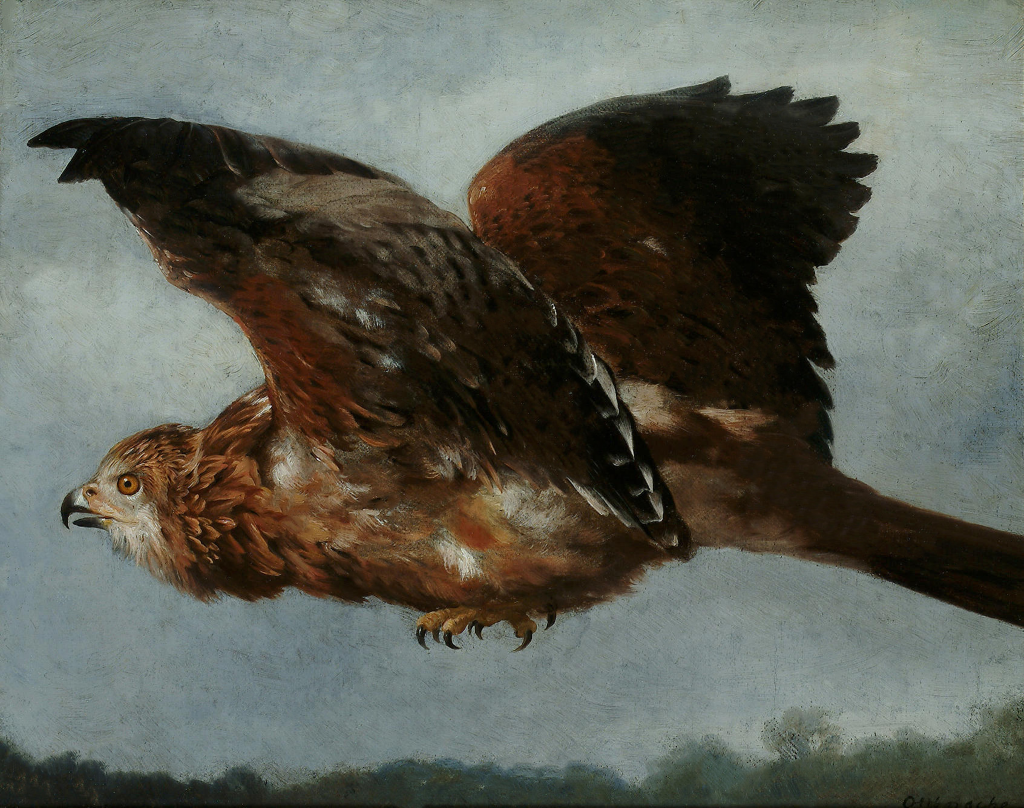
A bear lived in a cave
Sleeping winterlong
And like a shoot
In warming spring
Emerged out of the ground
Then hunters found the cave
And waited for the bear
They killed it
And they ate it
Now people shelter there

#
Pushing through a few inches of fresh‑fallen snow, Omer open his front door. Skis waxed and gear packed, he headed west and, by mid‑morning, reached his destination, thousands of acres of county park. Foundations of deserted farmsteads dotted the landscape. Here and there, waiting for tractor or horse to return, antique equipment squatted—a rusty hay rake, a planter with upright cylinders that once held seeds—and long ago, beside a tamarack swamp, a car had been pushed down a hillside and sat in a hollow edged by a dense tangle of dogwood bushes.
Years ago while exploring, Omer discovered the hulk, its rounded contours settled into hummocks of grass. All the windows were intact, and a little oil and persuasion got one of the doors open. There were no seats in the interior, so it was relatively easy to clean out. The hood’s release mechanism presented a challenge, but when it opened the compartment proved empty. The car was a shell, stripped of engine, transmission, and gas tank. The trunk lid was half open, missing its handle, in need of wire. He found an iron barrel in a garbage tip, fashioned it into a furnace, and its stove pipe now protruded from a side window.
Zigzagging between knots of brush, he located the car. After clearing the windows, he pushed the door handle’s button and swung it open, the hinges squeaking only slightly. Omer tidied up and shifted firewood from the trunk to what had been the back seat. Sleeping bag and supplies arranged, he opened the stove and lit some tinder, feeling quite at home. Adding a couple larger sticks, he shut the stove and exited the cab, taking a folding lawn chair with him.
Kicking around in the snow to find it, he stubbed his toe on the ring of stones. In gathering darkness, he roasted sausages and peppers over a campfire. Retreating to his snug cabin, the troll stoked the stove and cracked a window before falling off to sleep.
#
Glad he’d remembered his sunglasses, Omer skied north in brilliant morning light. In a grove of gnarled oaks overlooking the boat landing, he settled down for lunch. On the far side of the lake, snowmobiles charged back and forth, motors racing. Near a cluster of shacks, hunched figures sat atop buckets next to holes in the ice, trying to coax dwellers below into the upper realm. In the warm sunshine, with a full belly and propped against a big tree, Omer dozed off.
He awoke with a start. All was quiet, the snowmobilers gone, but he was certain he’d heard something. A few paces away, what had seemed a fallen log lifted itself erect, a ruff of quills flaring at its top. Above this corona stared the slitted eyes of a frost dragon. There were no appendages to the beast, save perhaps its scarlet tongue. What could he do? It was close enough to strike, and he doubted he would be able to avoid the thrust.
“It’s long since I fed upon your race, long since I’ve even seen one of you.” Omer tried to move but couldn’t, nor could he resist the serpent’s gaze. “Don’t you have illusions and ways of hiding? Yet here you sit plain as day.”
Though otherwise immobile, he could work his mouth. “It’s the Little Folk. I had trouble with them a while back. I suspected my concealments were somehow drawing them to me. But to tell the truth,” Omer found he was having to, “I’ve been practically tripping over magic creatures ever since I unmasked things. I suppose it’ll be unicorns next. That would be dinner and a toothpick to you.”
“Luck has always followed your kind. A few days past, I ate a cow.”
Still stuck in place, Omer relaxed a bit. “How do you come to be here? I didn’t know your venerable species inhabited this half of the world.”
“Same as you, I expect. My sires crossed the icy north when seas were lower.”
“That’s not how I got here. I took a boat.”
His captor continued, “It’s not flesh I hunger for. What I desire are those.” High above flashes of color danced, mylar balloons, two vibrant blue and one silver, snared by trailing ribbons. “They’re beyond reach, and I cannot climb trees.”
Omer had to laugh, able to move again, apparently released from the hypnotic spell. Climbing to the crown of the oak, he broke off a dead branch and tied the ribbons to it, letting the balloons settle to the ground. Grasping the stick in its mouth, the white‑scaled monster slithered away. Camouflage rendered it almost invisible, but above followed the gay balloons, marking its passage.
Not having a library card didn’t stop him from reading, only from taking books home. Omer scooched down in an armchair as Ishmael met Queequeg for the first time, learning they would be roommates. He slid deeper into his chair, trying not to laugh out loud.
At a nearby table, Jonathan sat with the contents of his backpack—laptop augmented with stickers; pads and pencils, some with erasers depicting heads of cartoon characters—interspersed with several books from the non‑fiction section. He’d been procrastinating writing his report, so Saturday he called Omer instead of friends his own age. At some level he understood a bunch of twelve‑year old boys are worthless if you’re actually trying to get anything done. “Have you ever thought about dinosaurs and dragons?” he said.
Putting a slip of paper between the pages to mark his place, Omer got up and seated himself across from the boy. “How’s that?” One book on the table was open to a picture of a Spinosaurus, a carnivorous dinosaur with a fin on its back. Another one read Paleozoic to Today on its spine.
“Dinosaurs lived millions of years ago,” Jonathon continued his thought, “before anybody was around. And people didn’t understand their bones till maybe a hundred years ago. But dragon stories are ancient. It’s weird. How can they not be connected?”
“Hmm … There’s evidence the Black Sea was created in a catastrophic flood, like Noah’s Ark, and many cultures have Great Flood stories. Maybe a real event started them all. But nobody ever saw a dinosaur, yet people dreamt up giant lizards all the same. Setting aside the fire breathing, it is quite a coincidence. Unless you think about giants, I suppose …”
When Omer failed to recommence, Jonathon prompted, “Giants …”
“Well, frozen Mammoth tusks and bones have been washing out of riverbanks for eons. Even a few dinosaur parts occasionally show up, though they are quite rare. Old stories often associate giants with the earth, living in the ground and sometimes turning back to stone. Maybe dragons are a kind of giant, a legend trying to explain fossils.
“Have you ever thought about humans and Neanderthals? It’s sort of the opposite. There were thousands of years between when Homo sapiens migrated from Africa and when people think Neanderthals went extinct. Scientists even say most humans have a bit of Neanderthal genes in them, so obviously they knew each other. It was a long time ago, but you’d think there would still be traces.”
#
Circling the old brickworks, a hawk rose on warm air currents rising at the face of the bluff. Gliding over the upper town, it saw the smallest detail below revealed: houses and neighborhoods; children on playground equipment; a straight line of train tracks dissecting a woods scattered with ponds, a hidden path winding alongside it.
The smell of loamy earth filling him with encouragement, Omer walked to town. Reaching the bottom of the hill, he heard a voice from the direction of the millpond.
“I have an opportunity for you and a non‑opportunity, if you will?”
A gray, neatly trimmed beard with curled mustaches adorned the man’s face. Leather patches on his suit’s elbows suggested more of the outdoors than the office. Hands resting atop a thin white cane with red stripes, he leaned forward, smiling.
“Do we know each other, sir? My memory is so bad.”
“I know you, friend. In fact, I’ve been looking for you. It’s my specialty, you see, finding people.”
“Why would anyone want to find me?”
“All sorts of reasons—scientific research, commerce,” he paused a beat, “even vendettas. But not everyone I find gets found, if you see what I mean? Sometimes they make arrangements.”
He stood up from the bench, sweeping his cane in tapping arcs, departing without another word. Watching the man stop at the curb and navigate the crosswalk, Omer had the urge to call out and demand an explanation, but he sensed one would come only at a time of the blind man’s choosing.
“I might have a problem.” Molly led him to an empty booth.
“What’s the matter?” she asked.
“I met someone just now who says he knows me, though I’m sure I don’t know him. I think he threatened me.”
“Whatever for?”
“That’s the thing. I can’t imagine.”
#
Pitching down toward a clearing in the woods, the hawk beat its wings to slow itself, alighting on the blind man’s outstretched arm. Pulling a gobbet of meat from his pocket, he fed it to the sharp beak. “A good day’s work.”
#
Molly’s forehead wrinkled in worry when Omer told her he was leaving town for a while, but he made light of it saying he was going fishing. As he let out Sam the cat, he asked him to keep an eye on their friends while he was gone.
Crossing fields long fallow, fencelines grown thick with trees, he approached the swamp and the derelict car, the ground underfoot spongy but dry, green shoots poking through last year’s dead growth. By the time he had camp ready, shadows were lengthening. Taking to bed soon after supper, he awoke in darkness, tossing and turning the remainder of the night.
In the morning he decided to go fishing. Crowded with cattails, much of the closest lake’s shore lay blocked by an impenetrable barrier, but if you knew where to look the reeds receded, exposing sandy bottom. Pulling a two‑piece casting rig from his daypack, he slipped the middle ends together, making sure the guides were properly positioned. Stringing monofilament line through them, he tied on a fluorescent jig with a spinner. On the third or fourth cast, he felt a tug and set the hook, landing a nice perch, bold vertical stripes on its sides, evolved to hide in a domain of murky weeds.
He hadn’t seen any morels in the woods but did find a patch of ramps. When the water in the pot came to a boil, he added a pack of instant ramen and the oniony ramp leaves. Ripping open the spice packet, he coated the fillets with its contents, nestling them into the noodle broth.
An afternoon walk tired his body but did little to calm his mind. Evening breeze brought the smell of rain. In the night big drops played a percussion solo on the car’s steel roof.
#
Breaking cover, a buck lunged across a county highway, seemingly oblivious of speeding vehicles; trucks and trailers launched boats at a busy dock; people and dogs milled about or ran wildly inside a fenced enclosure; and whipping a stick over his head, a figure stood beside a lake. The hawk turned, circling back toward town, soaring over new‑planted fields.
#
First to the bike trail, then past the dog park, and finally to the access road, Omer hiked to the nearest town. At the grocery store by the old creamery, he purchased a loaf of bread, a jar of capers (because you always forget something) more butter, a bunch of carrots, and small potatoes. Strolling Main Street, looking into the windows, he stopped in front of a gift shop. In ten minutes he left carrying a flat, rectangular package wrapped in brown paper.
#
Thinking he’d try for bigger quarry today, Omer snapped a spool of heavy line onto his reel and headed for the culvert. A paved bike path ran atop a causeway between two lakes, and embedded at its middle, a large steel pipe allowed water to pass, cutting a channel through the vegetation. Seated on the earthwork’s grassy bank, digging through his pack, he removed a small tackle box and flipped open its lid, selecting a lure with two treble hooks attached to its belly.
He flicked the rod’s end, and the brightly painted bass plug splashed down at the edge of the cattails, concentric rings dispersing outward. It plunged below the surface when he gave the line a yank, bobbing back up when he let it go slack. On the path two women sped by on bicycles, loudly calling back and forth. Plucking a plastic frog from the tackle box, Omer switched lures. Looking to see no one was coming, he cast it near a patch of lily pads. On retrieval the frog wobbled back and forth as though it were swimming.
“Any bites?”
“Nothing yet,” Omer didn’t need to look to know who stood behind him.
The man lifted his cane, telescoping it until he had a long pole. Taking a wriggling worm directly from his pocket, he skewered it, never looking at his hands. Bait and bobber hovered an instant at the end of its arc before plopping into the water.
“It seems to me there are two kinds of people,” the blind man said in an avuncular tone, “the sensible type and the mulish. In my experience, the first group is much happier than the second.”
“What do you want, scavenger? Money?”
“Sir, you read me entirely wrong. I believe it was the Brothers Grimm who first recorded the tradition, and I do love the classics. You’ll give me your first‑born child, or bottles filled with formaldehyde could be in your future. Maybe a cage and experiments? A hunt and a trophy on the wall? I have many customers with varying tastes.”
“You’re a right bastard, aren’t you?”
“Now you’re getting it!”
“I don’t have any children, fool.”
“These things are done contractually, of course, and there’s plenty of time.” A few moments passed in deadly silence.
“Hey!” the blind man shouted, his red and white bobber disappearing below the surface. Hoisting the pole, he swung a flailing carp onshore, bringing the specimen close to his empty eyes. “Only rough fish these days. It’s all I catch.” He took a knife from his belt and cut the animal through at the gills, releasing its body to flop down the embankment. Using the back of the blade, he knocked the remains of the head, mouth still gasping, free from the hook.
“I suppose you’ve already located my camp?”
“Most certainly.”
“Then meet me there tomorrow at noon,” Omer said, packing up his fishing gear, “and I’ll sign your contract.”
#
Low clouds scuttling over naked treetops, Omer walked into the tamarack swamp. No trail marred the uneven ground, alternating between tangles of sedge and stands of tall, straight trunks, branches sprouting spring needles. Deep in the labyrinth, seated on a gnarled root, he heard rustling in the undergrowth. A red squirrel with tufted ears leaped into the clearing. Using dexterous, sharp‑clawed paws, it pried a banana yellow mushroom out of the moss. Only then did it notice Omer. In two hops it was gone, prize clamped between front teeth. After an hour of contemplation, he headed back to his rendezvous.
In the stone ring, he built a stack of sticks around a wad of paper, carefully inserting a lit match. Eventually the blind man came clacking through the dogwoods, seating himself beside the fire, on a log opposite the troll’s lawn chair. “So this is how you make your living, scaring people?”
“Part living, part passion.” Pulling a pipe out of his breast pocket, clenching it between his teeth, the man extended his cane toward the campfire. A lick of flame leapt to its end, swirling in a ball as he brought it to his pipe. “What do you pay for your air with?” he asked, exhaling a billow of smoke. “Considering yourself better than others can’t be very lucrative.”
“I suppose I was put here like anybody, and I do my best.”
“Yes, yes,” the blind man said, done with preliminaries, “about that contract.” He again reached into his coat, this time extracting a roll of parchment and a pen.
Omer accepted the proffered indenture. “Yesterday you said there were two kinds of people. I’ve been thinking, and I suppose it’s true. But the way I see it, the difference is between those sitting in chairs and those sitting on dragons.”
The man’s head snapped up. He stood, trying to move, but the cuff of his pants was snagged on the log. He struck it with his cane, but to no avail. Omer got up and tossed the scroll into the flames. Examining the fancy fountain pen a moment before pocketing it, he walked away, screams mingling with the wind.
When all was quiet, he returned to camp. The serpent rose up, a bulge at its middle. “I’ve kept my word and taken care of your wizard.”
“That was a wizard?”
“Con‑men, swindlers, wizards, they all taste the same. And the rest of our bargain?” Opening the car trunk, Omer removed the package, stripping off paper wrapping. He walked to a nearby tree, raised a mirror in a carved gilt frame to a nail in its trunk, and the dragon approached.
Extinguishing the fire and packing his camping things, the troll started home. In the glade the snakelike creature rocked back and forth in front of the mirror, its long body shifting through changes of color, bright and strange. From a hill overlooking the swamp, the hawk flew away, perhaps set free, perhaps already seeking a new master.
#
The bell over the door chiming above his head, Omer entered the coffee shop. Customers politely pretended not to notice the owner grab him in her arms and plant a big kiss on his lips. They seated themselves at a booth, Molly’s new assistant taking over behind the counter.
“How was fishing?”
“Mostly nibbles, but I was thinking, is there anything we need to talk about?”
She blushed, looking down at her hands. “I meant to tell you. I’m going to have a baby.” Lifting her gaze back up, excited and nervous, she met his eyes.
“Me happy? Of course, and only mildly terrified.” He reached across the table and gave her hands a squeeze. “I’ve never lied to you, Molly, but maybe I didn’t tell exactly everything.”
#
Puffy clouds dotted the sky, dollops of whipped cream floating in blueberry sauce. Occasionally one passed overhead, casting a cool shadow. Saturday at Jonathan’s house meant breakfast for lunch, so it had been decided that waffles would be served with the champagne, pick your toppings.
The life of a troll is like being an illegal immigrant. You’re here, but it’s hard to prove you belong when you need a library card or a driver’s license or a marriage certificate. Omer got around this the usual way. He bought a fake ID.
An accordion player with tuba accompaniment struck up a waltz. Omer spotted Jonathan’s parents, who were supervising things in the backyard. “Howard, Becky, I can’t thank you enough for this.”
Crepe paper streamers decorated the patio arbor, folding chairs filled with family and friends facing it. “Nonsense,” Becky replied, both she and Howard beaming smiles. They still believed he was the father of one of their son’s classmates; some spells can’t easily be undone.
The band switched to a familiar tune, and as everyone turned toward the sliding glass door at the back of the house, Becky grasped Omer’s elbow, marching him forward. The door open, and Molly stepped out, met by sounds of pleasure and nods of approval. Wildflowers woven into her dark hair complimented her simple, empire waist gown, gathered above the little bulge at her middle.
Just for the occasion, Becky had completed a certificate online to officiate weddings, and she began. When it was time for the rings, Jonathan and Tilly delivered them in a pouch on her collar. When Omer was told to kiss his bride, he almost fainted—it seems he’d been holding his breath—but she steadied him, her lips tasting like all he wanted in the world.