Ward Krancel
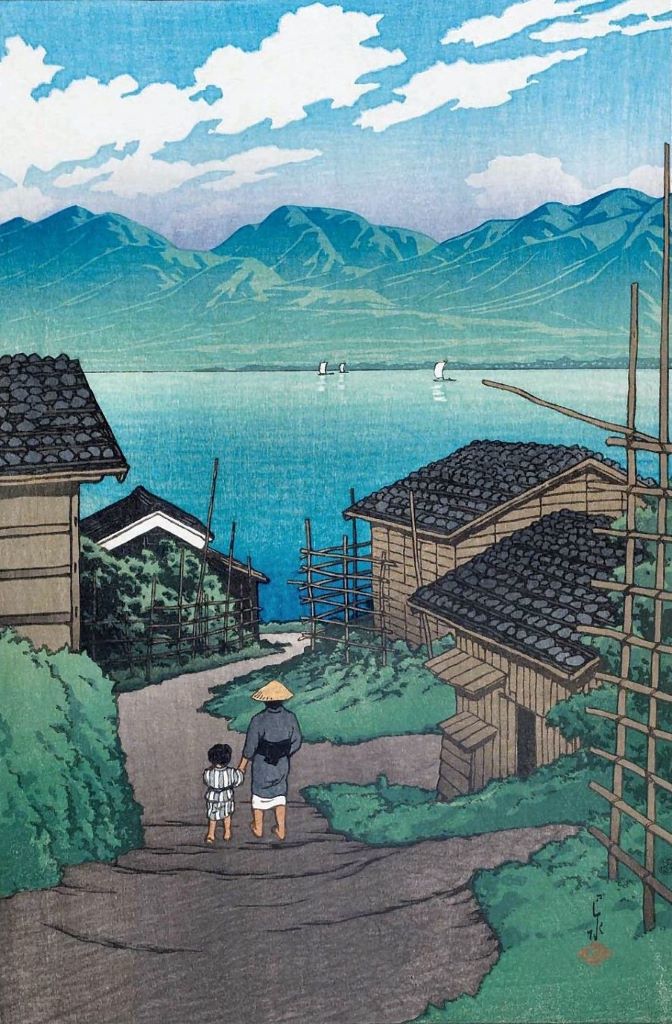
Wind beat the sea into green and gray shards, sweeping a broom of low clouds behind. Neatly stacked contracts formed an archipelago of paper islands on the conference table. The first meeting on his afternoon calendar was due.
Again looking out the window, his eyes panned over the cannery. Steam rose from the power plant. A truck maneuvered an arc, backing up to the loading docks as another pulled out the gate, getting up road speed. The complex hadn’t always dominated the waterfront. He’d grown up above one of many pierside shops, now long gone. He learned his trade at his father’s side, and in time, his parents sent him to university to better the family. And this is what he’d built.
His youngest son wouldn’t mind. He’d take the money and start a tattoo parlor or a night club of obscure tastes or travel the world until it was all spent. They had never seen eye‑to‑eye, but over the years they’d come to a truce. The young man did as he pleased, but he was industrious.
He sometimes felt a flicker of disappointment when he thought about his daughter and then a pang of shame for having done so. She’d been a gifted student but had set aside her studies soon after marrying. But all that was in the past. She was raising beautiful children, grandchildren who were a comfort to him even on a day such as this one, and she would doubtless use her share for the prosperity of her home.
His oldest boy was the problem.
Custom often steers the eldest son into the family business. Such a child might resent this expectation, having his own wishes, or he might feel the birthright gave him privilege. But his son was enthusiastic and did a good job and was well liked because of it. He hoped this at least wouldn’t change.
There it was, the buzz of the intercom.
“Yes?”
“Your one o’clock, sir.”
“Send him in.”
His eldest son came through the door, a good‑looking man in his thirties. He sat down on a sofa facing the window, spreading his arms across the back.
“I never know how you get anything done with that view to distract you. I have to work in a plain white box, or I can’t focus. So why the face‑to‑face? What’s up?”
The older man’s eyes remained fixed on the horizon.
“I took the weather report and called in some ships,” his son continued. “It’s getting to four meters at the Shelf.”
“Thank you. That’s the right decision.” He pulled his attention away from the gray sky, back to the white paper on the table. “There’s something important we need to talk about.” His son looked at him quizzically but sat up from his slouch.
“Since the day you started here, you’ve been an asset to this company. I have, we all have, benefited from your energy and intelligence. I can’t sell the business without dividing part of the proceeds equally between you and your brother and sister, but I give you all I stand to profit from the sale for not giving you a say in it.”
His son stood up, his face blanching. “What are you talking about? I haven’t heard of any offers. You can’t mean the redevelopment thing. We agreed it’s ridiculous.”
“I do mean the redevelopment. Forty percent of the property will go to green space with public access to the waterfront. What they do with the rest, build condominiums or a mall, I can’t control.”
“You just decided?” his son said in a tight voice, his face beginning to redden.
“I’ve decided.”
His son slowly walked to the door, but when he reached it he spun around. “Six hundred people work here!”
“I’ll speak to the staff myself on Monday. You’re not the only one I have to make amends to.” The young man stood frozen, as though he would say more, but then turned and departed, leaving the door unshut behind him.
He stood up from his desk, crossed the room, and closed the door. Alone again in his office overlooking the bay, he saw a disturbance on the water near the eastern headland, a pod of oceanids.
He’d been a boy the first time he saw one up close. His family had cleaned and packed many marine creatures—oysters and crabs, squid and scallops, numerous kinds of fish—but over time oceanids became their best seller and eventually the sole product of the cannery. It had taken determination to grow a seaside shop into a firm with international distribution. He’d felt proud, seeing pride in his own father’s eyes.
#
Three years after his wife’s death, he still couldn’t talk to people about her. She’d loved him despite his failings; she’d listened when he needed to talk; they’d been young together. Recently, his daughter began gently encouraging him to seek companionship with a woman again. He’d resisted discussing it, but soon after this began, an acquaintance invited him on a holiday. He surprised himself by agreeing.
Fragrant air poured through the rolled‑down window as the car, suitcase on the back seat, wound along the coast. The address turned out to be a fashionable villa, modernist cement cubism with large panes of energy‑efficient glass. His host was there to greet him as he pulled up. “You made it!”
After settling into his room, he joined the others assembled for this “boy’s weekend.” There were two additional guests, making it four in all. He shook hands with his host’s cousin, who was involved someway in engineering, and a colleague from the host’s seafood brokerage. The other three men were all ten or fifteen years younger than himself.
“Let’s go into town for dinner tonight,” their host suggested.
They would be attending a prestigious motor race the next day, running a closed section of the coastal highway. It was an annual event in the region and terminated in the nearby town. The cousin apparently knew one of the drivers, and it was already arranged that they would have access to areas where spectators weren’t normally allowed.
The restaurant sat perched atop a hill overlooking the coming day’s route, and they were seated on an open deck with a commanding view of the sunset. The meal was excellent, the atmosphere buzzing with anticipation. They even chatted with a group of attractive women at the next table who were staying at a hotel in town.
He didn’t want to stand out because of his age, but when they returned to the villa, sleep began calling. He accepted the offer of a cigar but promised himself he’d stand firm, even at the risk of a few jokes at his expense, and head off to bed as soon as it was smoked. A wedge of lawn with a fire pit and chairs overlooked a shoreline of tumbled boulders. As delicious as the expensive cigar, the evening breeze lulled his senses.
“So what else is on the agenda?” the host’s colleague asked.
“There is one additional item, I believe,” their host replied with a grin.
The cousin and the colleague jumped up, jostling each other comically on the gravel path leading to the rear of the house. As they followed he said to his host, “I don’t mean to be a party pooper, but I think I’ll turn in.” This won him a friendly smack on the back. Here it comes about the geezer needing his rest, he thought. Might as well get it over with.
“But I hoped you’d like this part. I was counting on it.”
Sliding doors opened onto a large, tiled room lit only from below the surface of a swimming pool, dim blue light shimmering on walls and ceiling. At the far end of the pool, the other two men stripped off their clothes and were soon naked and diving in. What was this about? Then he saw something else in the water, dark shapes joining the men as they swam to the shallow end, near where he and their host stood.
“This is your stock—really the finest. That’s what I tell people, and it’s true.”
The swimmers now sat on the bottom in a few feet of water. Around them coiled sinuous forms, female oceanids, lacking the male crest.
“A friend of mine in pharmaceuticals turned me on to this. You add a chemical to the water, and they swarm all over you. It takes a bit of getting used to, but it’s out of this world.”
An oceanid is not a chimera of a human being and a fish as the ancient poets described, but when seen basking on rocks, they do owe some resemblance to both. Though living nearly all their lives at sea, they breathe air. They have long, eel‑like tails, and the end of their pectoral fin has adapted into a hand to forage on kelp and crustaceans. Their skin is smooth like a human’s, but it has a silvery rainbow sheen. They are undeniably beautiful in the water and do, of course, have orifices, and the men appeared to be copulating with them.
Inwardly, he composed himself. “You can scoff, but this old man is bushed. I’d better go lie down or I’ll fall down.” He shrugged his shoulders in what he hoped resembled self‑deprecation, and his host laughed and showed him the stairs to the main level.
He found his room, showered, and put on his pajamas. But he couldn’t find sleep and was up again at dawn.
Driving into the hills, away from the coast and the auto rally, narrow country roads dipping into wooded valleys filled with morning fog, he worked it all out. It wasn’t just what he’d seen the night before and the part he’d unwittingly played in it by supplying the broker with an expensive grade of live product, it was something that had been growing in him a long time like a seed or the life inside an egg.
#
The intercom on his desk buzzed. “Sir, your two o’clock appointment is here.”
“Yes, thank you. Send them in.”
The details already settled, it was merely a formality to sign his name and sell the factory to the Waterfront Redevelopment Authority. Lawyers shook hands, filed contracts away in their briefcases, and exited the room. Out the window, far beyond the bay, clouds were lifting. He put on his coat and followed the others out of the office, telling his secretary he was leaving for the weekend.
A few rays of sunlight penetrated the gloom as he left town, melting the dusting of snow that had fallen. The sky had cleared by the time he reached the turnoff where a dirt road led upslope along a stream. Unlocking the gate and swinging it open, he carefully started the drive up the rough, winding track to the lake at its head. When he reached the grassy pad at the top of the road, the sun had disappeared over the hills.
The life cycle of oceanids includes a larval stage that’s completed in fresh water. When he’d found the right location, he began buying parcels of land through proxy companies. It had consumed most of his accumulated fortune. After he’d purchased as much of the watershed as he was able to, he filed documents endowing a foundation to preserve it in perpetuity. He hoped one day to bring local school children to visit.
Setting up the tent and camping gear he’d packed the night before, he sat down on a folding chair. In the twilight, striking the still surface of the lake, fish fed on bugs. His memory drifted back to the first time he’d seen oceanids unloaded from the boats.
His father made his selection, agreeing on a price with the captain. Walking beside the cart as they retraced their steps along the pier, his boy‑self said, “Look, this one’s still alive.”
His father lowered the handles of the cart, resting it on its props. “Yes, I see.”
They looked into the strange black eyes of the creature as its life faded away. There seemed to be recognition there of its fate.