Ward Krancel
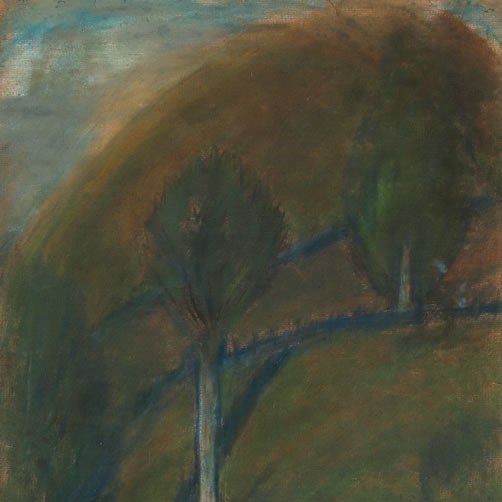
Upon the ground
A soft white blanket
Covers those below
Who rest their rest
Or dream their dreams
Of things we cannot know
Prologue
I wonder if the inventor of the stone column was thinking of trees. I can picture someone in the woods, tall pillars holding the canopy of leaves aloft like a ceiling, when inspiration struck. There’s a place not far from my home where, in the midst of a corn field, a huge old oak sits atop a hill. Under the broad cover of its boughs, roots protrude from the earth, footholds up and down the slope. I wonder if the inventor of the stairway lived near an elf’s lair.
Until recently I hadn’t known they were there. Until a few years ago, I hadn’t seen one of the little folk in ages. It had been such a long time, I’d stopped checking around corners. But since I found the hill, unease has never fully left me.
Although fairies are exceptionally rare, it’s still possible to find signs of them deep in the woods, flowers blooming out of season or vines twined into diminutive pavilions. Lore on the subject suggests living things bend toward them wherever they go.
Majestic in girth, resplendently dressed in dense foliage, the oak on the hill is a lord among trees. Its leaves were turning crimson when I came upon it, in bold contrast against the field of golden stalks. Having seen the signs, I knew that beneath it must be their nest, their realm. Whether the spaces below reflected the splendor of legend, I couldn’t say. All the while feeling an itch on the back of my neck, I returned the way I’d come.
#
Molly fell into a rut when Beth’s school year started, so she got a job working as a receptionist on Mondays, Tuesdays, and Thursdays. Money wasn’t a problem. Her husband apparently had a hoard of treasure he hadn’t bothered to mentioned before they got married.
When Omer came through the door, she smiled. “I was just thinking about you.” But as he approached her desk, she saw there was something on his mind.
“Could we talk?”
She glanced down at her screen. It was almost time for break anyway, and there were no appointments scheduled till after lunch. “Sure,” Molly replied, her face an inquisitive scrunch.
Walking two blocks over, they entered their former business, Humphrey and Louisa—please, call me Lulu—behind the counter. When Mickey bought the shop, her parents had invested part of the money. A few months ago they’d come for a visit and now seemed to be running the place. “Hey, my favorite couple!” Lulu beamed.
With drinks, and wraps from the cold case, Omer and Molly seated themselves in a booth. The shop was full, but Humphrey’s dedication to quelbe music provided background noise as Omer told his wife what he’d found and what it meant.
#
Elizabeth had proposed to her father that if he insisted on waiting at the bus stop, he should act as though he were only there by coincidence. Crossing at the corner, she approached his bench, and they headed down the sidewalk together, toward their rented townhouse.
“Omer?”
His daughter had recently begun calling him that. It was probably a phase, and it didn’t matter anyway. “Yes, Elizabeth?”
“Somebody in school today called me a name.”
He wasn’t sure he was ready for this conversation, but raising a child is mostly juggling. “What was it?”
“Monkey face.”
They walked a minute before Omer replied, “When bones from our ancestors were discovered, scientists named us after the place they were found, a gorge in Germany. Makes sense as far as it goes. But we’ve been called other things—ape‑man, ogre, troll. I’ve always preferred the last one because that’s what my grandmother said I was. She said I belonged to an ancient kind of people who still had a little magic left over from the Creation.
“I’m not the same as everyone else, Beth, and it shows a bit in you. I’m sorry if that makes things hard sometimes.” She reached up for his hand. “But luckily, you get most of your looks from your mother, who’s the most beautiful woman I’ve ever seen. So one, don’t listen to bullies. And two, I bet I can beat you home!” They both took off running.
Elizabeth, having won the race, burst through the door. Plopping down her bookbag, she hurried into the kitchen. “Guess what, Mom. We saw a real marmoset in class today. A woman from the zoo brought it.”
#
Omer put out feelers in the local community. Being fall, the buck was preoccupied. Being a fox, the fox was cagey. The owl was polite but aloof. In the cooling weather, the old turtle was absent, probably having already burrowed into the river mud. No one knew how long the elves had been under their tree, but the little folk are almost impossibly illusive. Had they been here all along, since his initial encounter with them years before? He decided to visit Ida.
When no one came to the door, he went to the side gate. On a kneeling pad near the center of the garden, Mickey picked tiny black berries from a line of low bushes, dropping them into a plastic pail. Standing at her bench, Miss Wilcox sorted and stacked pots. “I hate to interrupt, but could I invite myself in?”
Sitting around the Linoleum kitchen table, Omer told the healer and her assistant—now a businesswoman in her own right—his news. “You’re worried they’ll come for her,” Ida Wilcox stated. Omer’s silence was confirmation enough. “I promised myself I’d never do this …” the old woman trailed off, pushing herself up from her chair. “But under the circumstances, I suppose it’s necessary. I’ll have to call my ex.”
#
A gaggle of girls, all knees and elbows, tumbled with Elizabeth down the stairs of the bus. As was expected of him, Omer studied his phone, on a bench kitty‑corner across the street. He heard the tone of laughter shift. Glancing up from his e‑book, he saw some boys had lingered before starting home. Girls and boys talked within their separate groups, but Omer knew the gravity that pulled them into orbit. It’s good that children grow up. None the less, his heart ached a little.
When the boys departed up the street, horsing around and pushing each other, the group of girls scattered. Omer and Beth converged at the corner. “We’ve got company tonight, so we should get well fed.”
#
Elizabeth sat on the floor beside the coffee table, where she liked to do her homework. When the doorbell rang, her mother and father attended to the guests. An old woman came in carrying a covered dish, Aunt Ida, someone accompanying her through the door. Standing very straight he was barely as tall as his companion, who was stooped and small to begin with.
He took off an old‑fashioned felt hat revealing a bald pate crowned by a halo of bristles. “I’m Rufus.” A white beard, longer than Elizabeth had ever seen before, brushed his belly. He extended his hand, and her father reciprocated, but instead of shaking, the little man set something onto Omer’s palm, a blood‑red agate, faceted like a gemstone. After similar endowment her mother pinned an intricately woven wire broach to her blouse.
Ida Wilcox told Molly, “Don’t let him charm you. His princely manners wear off soon enough.”
In another minute Mickey let herself in. She joined Elizabeth on the floor. “Everybody acting like nothin’s happening?”
“Dad seems worried,” the girl conceded.
Dinner featured stuffed roast with herb butter for the meat‑eaters and mushroom curry for the vegetarians. Elizabeth’s father let her have a sip of fizzy pink wine with dessert—warm rhubarb pie alamode—which made her sneeze.
Soon everyone was seated in the living room, each with a cup of Ida’s homemade tea. A pause in conversation grew in length, and they all, one by one, turned to Omer.
“So, Dad,” Elizabeth unexpectedly broke the silence, “what’s the plan about the elves?”
“Hmm? Don’t be silly,” he said, lifting his gaze from his teacup. “What makes you think there’s anything like elves?”
“I listen to you talk.”
He had no reply for that.
As guests were leaving, Ida informed Omer that because he’d started it, he would have to find quarters for Rufus. Having already lost, he saw no point in debate.
Molly and Beth had gone upstairs. “This is usually my office, but I’ve set up a cot for you.”
“I spied a rear porch. Would it be too much trouble if I moved there?”
“It would be nippy and not too private.”
“Oh, I don’t feel the cold, and I promise not to offend the neighbors.”
“Suit yourself.”
As Omer helped with the cot, Rufus asked, “Did you ever throw apples at a wasp’s nest when you were little?”
“Might be, but I wasn’t too smart back then.”
“You haven’t actually seen any of these … pests?“
“Not recently, but I think they’re there, and they may have noticed me noticing.”
“The two of us had better go take a look. We’ll leave at sunrise.”
“Yes, I suppose that’s what we’ll have to do,” Omer replied and headed for bed.
#
The neighborhood of the great oak is active at dawn. A woodpecker hammers fruitlessly on the giant’s thick bark. Small birds flit from branch to branch, punctuating the chill air with music. Squatting squirrels, tails pulled over their backs as blankets, chitter and bark at each other. Then shadows emerge from the rows of corn, gathering at the foot of the tree and entering into the mound.
#
Molly had already walked Elizabeth to her bus before continuing on to work. Rufus was nowhere to be found, so Omer was having a second cup of coffee. The kitchen door swung open, and the little man appeared. “There you are my boy. Day’s a wasting.” Biting his tongue, Omer put his cup in the sink and went to get his jacket.
Walking down the sidewalk together, they made a curious pair. To begin with, Omer was short, and the old man, Rufus, if you added his hat, was only up to the troll’s shoulders. He had on the same fine vest he’d worn the previous evening and carried a paper bag, the kind with handles. When Omer inquired as to its contents, Rufus only said, “Wait and see.”
When he got married, the obvious choice had been he and Sam the cat would move in with Molly above the shop. These days he mostly used his house under the train tracks for storage. On the way, Rufus commenced a recitation of his life’s exploits, maintaining an incessant chatter regarding the extraordinary things he’d done and the exotic places he’d been. Omer didn’t feel much like talking and couldn’t get a word in edgewise anyway.
At the end of the hidden trail, he removed a small oil can from his pocket, gave the keyhole in the iron door a squirt, and slipped in the key, gently working it to and fro, the lock turning without complaint. “Would you like to come in?”
“No thank you. Can’t stand to be underground.”
Omer grabbed the daypack he kept ready.
In a mile the train tracks crossed a trestle spanning a creek. They traced the stream through brush and stands of boxelder, the old man quiet now. At the edge of the trees, tall yellow stalks presented a barrier. Omer pointed, whispering, “There it is.” A hill poked out of the field, atop it an oak resplendent in autumn color. “The corn acts like a moat—it’s difficult to pass through the rows crosswise—but there’s a ditch that runs near.” A line snaked up the hill, draining a higher section of field.
“Let’s go,” Rufus said, starting toward it.
“Shouldn’t we keep our distance? Better to have a plan, don’t you think?”
“Fiddlesticks!” exclaimed the old man.
Omer shrugged. Ida said he was the closest thing to an expert on elves as there was. After they scrambled up the gully, Rufus strode to the top of the hill, undid his breaches, and relieved himself on the trunk of the majestic tree. When finished he dug into the grocery bag he’d been carrying and began tossing things into the air. One of the fragments blew to Omer’s feet, a candy wrapper.
“That’s disgusting, messing up the place.”
“Oh, trust me, friend, it’s just the right approach. They hate litter.”
“But why antagonize them? We’re not looking for trouble.”
“I wouldn’t say antagonize, more like irritate. An infestation of elves is a headache. You called the right man.”
Omer had his doubts but on the return to town said no more about it.
#
Night breeze murmuring in the dry corn, a lone figure progressed up the ditch. Reaching the hill it disappeared, having located the door.
#
“Could you do me a favor? I’m tied up, and my dad just called. He’s having problems again,” Mickey said on the phone.
Omer was again waiting on his houseguest to arise. “Why not? I’m wasting my time here.”
“I owe you one.”
With Beth at school and Molly at work, Omer simply left. At the door he relented, turning around and leaving a note for Rufus saying he’d be back soon.
Entering the coffee shop, he saw the interior was lit only from the windows. No lights meant none of the appliances were working either. “Omer, my man!” came a call from the gloom. A phone’s flashlight beam shone from the door to the basement.
“Hi, Humphrey!” Omer answered, waiting for his eyes to adjust. Mickey’s parents, emigrants from St. Thomas, had both recently retired, sold their condo, and, she said, were making a hobby of running her life. When their “visit” showed no sign of ending, Mickey moved in with Ida.
The new occupants were still getting the hang of the place. “Did you check the main breaker?”
“That’s just the positive thinking I’ve come to appreciate about you!” Humphrey laughed, “Now if you’ll only tell me what I’m looking at, I’ll check it.” Omer went to a cupboard, retrieving a rechargeable flashlight. “Ha! Didn’t know that was there.” They tramped down steep stairs into the musty basement. Humphrey went to an array of objects bolted to the stone foundation. “I can’t make heads or tails of this. And I wouldn’t want to touch it either. It’s like out of a Frankenstein movie.”
“You’re right, that’s all dead.” Dusty cylinders the size of cartons of oat cereal, with metal ends like shotgun shells, stood upright in a rack. “Those big fuses must be a hundred years old. They didn’t bother to remove them when they updated.” Omer opened a gray box farther along the wall. “The circuit breakers are in here.” With a loud clunk, he flipped the bottom switch and closed the panel. In the shop above, a steady base rhythm commenced thumping on the speakers.
Upstairs the lights were on, and the clocks on all the machines blinked 12:00. “Let me get you something on the house, and I’ll still owe you a favor.”
“I don’t mind a bit. Besides, I owe your daughter a few favors myself. Just remember, you can’t run the washing machine and the roaster at the same time.”
#
Omer found Rufus in the kitchen, having made himself breakfast and finishing his tea. “You wanted a plan?” he said upon his host’s arrival. “Let’s get everyone together this evening and review our campaign. Today let’s focus our efforts on one more reconnaissance. You can never have too much information. That’s what I always say.”
The sun high overhead, they neared their destination. The little man began to chuckle. “What do you think, how about I go up there and start a fire?”
Omer was appalled but tried to laugh it off. “You’re having me on. You’re far too wise to set a fire on a windy day.” But suddenly Rufus plunged into the trench, dashing toward the hill.
What was the fool thinking? What if the corn caught fire? Could it do that? Omer stopped just within the island of shade cast by the great tree’s boughs. Listening he heard only the scraping of branches. Looking he detected no movement. The power of concealment instinctively rose within him as he followed the hill’s circumference. Halfway around a doorway passed into the ground, and in front of it, waving a lighted branch, Rufus danced a wild jig.
“Don’t be a madman. Come away!”
“Where are you, friend?”
Kneeling behind a bush, cloaked in disguising magic, Omer waited, fearful to speak again.
The little man thrust his hand into his pocket, retracting it with a flourish. Glittering particles scattered in the wind, sticking to the troll’s skin. Whatever was in the dust that made him visible, he also felt it shutting down his brain.
#
When Elizabeth got off the bus, neither of her parents was waiting. But across the street, on the bench her father often occupied, sat the little old man, Rufus, who’d been sleeping on their porch. He waved, calling, “They sent me to collect you!”
“What’s Omer doing?” Elizabeth had crossed the street.
“It must be important if your father sent me in his place. I’ll tell you everything on the way.”
#
“Hi, Molly, what’s up?”
“I can’t find Omer. He isn’t answering his phone. Did he say he was going anywhere?”
“Not to me. What can I do?”
“Could you walk Beth home from the bus stop? I’m at work, and with all that’s going on—”
“You don’t need to explain,” Mickey interrupted. “I’m on my way.”
#
The crow patrols his borders, ever watchful. The finch tends her own affairs, having much to do before winter. The nuthatch, so often upside down, has stopped bothering with the uninverted world altogether. But long ago the jay made pact with the little people. JEER-JEER-JEER-JEER came a call across the evening fields, a warning.
Rufus rapped on the stone. In a minute, the tightly fit portal swung outward. “As per our bargain, one human child.” Elizabeth came willingly, caught in the spell.
#
Omer’s mind began piecing itself together; there was something on top of him. Chip bags and coffee grounds slid from his chest. “Finally coming to?” Rufus crouched over him. “Sorry for covering you in trash, but I needed to leave awhile. They wouldn’t dream of digging through this stuff. A bother dragging it here, but worth its weight in gold.”
He rolled onto his knees, brushing himself off. “What’s your game? I think Ida made a mistake asking you here.”
“Don’t be cross. The job’s just about to start, and you’re the workman.”
On his feet, shaky but coming alive, Omer responded, “What do you mean?”
“They’ve taken her, your little lamb, and you stand but footsteps from their door.”
Grabbing Rufus by the collar, he growled, “Show me!”
“There. See the flat stone?” the old man pointed at a dimple in the hillside, a patch of exposed granite. “Let me go or I won’t help you.”
“If it opens, do it.”
“I won’t be going below with you, bit of a phobia of mine.” Omer reluctantly released his grip, straightening himself and brushing at the garbage still clinging to his clothes. “Leave it, like bug spray to them. In fact, here’s some of that too.” Rufus extracted a green spray can from his waistcoat. “Turn around. I’ll get your back.”
#
By the time the three women entered the woods, dusk was settling. Ida had come early for the meeting, letting herself in with her key. A few minutes later, Mickey barged through the door. “She wasn’t there! The bus had already gone.”
“I’m sorry, honey,” Ida told Molly on the phone, “but you better come home toot sweet.” When Molly arrived, the wisewoman said, “I don’t see any choice, ladies. We’ll have to fix this ourselves.”
#
Descending a tightly‑spiraling staircase, Omer advanced into goblin glow. At the landing, he stepped into a shiny opalescent sphere like the inside of a soap bubble. Doorways, five identical openings, led into the earth. Held prisoner in a labyrinth, his daughter would be down one of these tunnels. All he had to do was pick the right one.
Omer felt the pressure, the manipulation, but resisted.
Elves had been first, and like loving elder siblings, gladly made room for newcomers. In all the wide world, they had but one last place, one remaining refuge. Who would take away this final scrap?
He spotted the tricks, the propaganda. Though the little folk were few, they persisted, and neither were they weak nor benevolent.
“Pardon, could you point me to the restroom?”
A boy, thin and pale, dressed in tattered clothing, dashed from one of the tunnels. It was Jonathan. “Please, they’re right behind me. We have to get out!” He pulled Omer’s arm, urging him toward the stairs.
This, too, was deception. Jonathan, grown up now, was away at college.
“I hate to be a bother, but I’m afraid it’s rather an emergency. If I could just use your facilities?”
The touch of a feather, a vibration tickling the soles of his feet, Omer sensed a shift in the balance of things. The boy disappeared, and the room resolved from perfect orb into quaint grotto, the walls composed entirely of intricately interwoven roots.
“What’s that stink, caveman? It’s not your bowels.”
Omer recognized the youth standing before him, handsome and haughty. “I’ve been using a new deodorant,” he replied, his equilibrium returning. “Bring me my daughter, little lord, or I won’t be responsible for what happens next.”
“She’s of no use to us anyway, covered in the same noxious balm as you.” Two gloved retainers led Beth out from an alcove.
“Are you alright?” Omer knelt at her side.
“Yah, I think so, a little dizzy.”
The tree roots started creaking. At first a cricket’s chirp, it soon became a door hinge in need of oil. As father and daughter headed up the winding staircase, the roots commenced squealing like a poorly tuned violin.
#
“I hear something,” Mickey whispered, clicking off her flashlight. Behind her Molly and Ida stopped, turning theirs off too.
Hysterical laughter came toward them through the woods. “A fart in an elevator! An M80 in an anthill!”
All three women turned their lights on simultaneously. “What have you done, half‑blood?” Ida barked at Rufus, frozen in the triple beam.
“Cram a troll down a hole!”
As the little man danced in glee, Ida came forward and cracked him on the shin with her walking stick. “This isn’t about you, remember?”
“Yes, madam. You’re right as usual,” the little man croaked, rubbing his leg. “But I’ve done it. You’ll see.” They gained no further intelligence from him. He just kept repeating you’ll see.
Confronting a corn field, they beheld the hill. “We’ll have to go up there,” Ida acknowledged. Ascending the gully, she ignored all offers of assistance. “Stay put,” she said as they neared the great oak, “and I’ll talk to the tree.”
Leaning on her stick, the old woman climbed the hill. She circled round and round the base of the oak, muttering all the while, every few steps poking a root or giving the mighty trunk a thwack. “We’ve come to an arrangement,” she said, rejoining her friends. “The tree will help us if we help it back. It says having elves in your roots is like having mice in the basement—not really dangerous but a nuisance all the same—and they tickle. Now come, the acorns are ripe. Fill your pockets.”
#
When they reached the top of the twisting stairway, the door in the ground opened. Surprised to find a reception committee, Omer led Beth to her mother then turned to Rufus. On seeing his expression, the little man sprang downhill, but Omer again caught him by the collar.
“You and me have some things to discuss.”
Rufus recommenced laughing crazily. “Like a cherry bomb in a toilet! I knew what getting you in there would do. They’ll all be packing.”
“It’s okay, Omer. Leave him to me,” said Ida, rapping the little man’s shin again with her cane.
#
Sunshine melting the last patches of snow from the hill, the oak died, its branches braking off all at once with a mighty crash, piling around its trunk. The presence of the elves had given it long life, but with them gone, its time had come. That spring Ida Wilcox died too.
An odd assortment of people gathered in her garden—a shaman in a tailored suit; two elderly sisters who spoke only to each other; a kind‑looking woman with big glasses who worked for the park system and her husband who owned a nursery; a small troop of small women in colorful traditional dress, carrying baskets and scattering dried flowers.
Mickey read a poem by Walt Whitman. The kind‑looking woman with glasses told an anecdote about the first time she met Ida, talking to a bush in an ornamental garden. The small women did a small, intricate dance, scattering more fragrant petals. The sisters, Ida’s oldest friends, gave her eulogy, to each other and in code. Throughout the service, the shaman quietly wept, dabbing his eyes with a bright silk pocket square. And at the end, as was specified in her last wishes, Ida’s water‑cremated remains were mixed into the compost pile.
Rufus disappeared soon after the problem with the elves had been resolved. Omer would never forgive the little man for endangering Elizabeth, but he had to admit his methods, disagreeable as they were, had proven effective. It turns out fairies can’t stand DEET.
They received a letter from a lawyer, inviting them to be present at the reading of Ida’s will. Entering the glass conference room of a local office building, a young woman in a suit sat down at the table. Besides Omer’s family—Elizabeth had been included specifically—the only other person waiting was Mickey.
“Ida Wilcox had no living relatives, so she decided to distribute her property amongst you four. Mr. … Om·er·as·tus?”
“Its just Omer,” Omer replied.
“And Mrs. Omer …”
“Its Molly.“
“Miss Wilcox has given the two of you almost all of her house, lean and mortgage free—”
“Almost all?” Molly interrupted.
“That’s where you come in—may I call you Elizabeth?”
“Sure.”
“Pleased to meet you. My name’s Adonna. As I was saying, that’s where you come in. Miss Wilcox specifically willed to you a part of the house, the upstairs bedroom in the turret under the witch’s hat roof. And although this provision is not legally enforceable, her stated intention was to …” the lawyer looked down at her notes, “Quote: ‘haunt the heck out of any adult who didn’t like it,’ end quote.” Elizabeth squealed, covering her grin with both hands.
“And to you, Mchie Hendrik. Ida gives you her garden, with an easement through the side gate. Unfortunately, the City will not allow the plot to be divided, so there is a question remaining that may need to be resolved in probate court.”
Molly had to get to work and drove Beth to school—she’d been excused for this important occasion. “Want to have lunch at the shop?” Mickey asked Omer on the street in front of the lawyer’s office. “Tell you what, since I recently got a windfall it’s on me.”
When they were seated, Mickey said, “Can I be straight with you? I don’t really want it. Ida was generous, and I’ll never forget that, but it’s just not me. And my parents have taken over here whether I like it or not.”
As if on cue, Lulu approached with a full carafe. “Can I top you off?”
After disposing of her mother, Mickey continued, “Would you be interested in buying me out?”
“I’m pretty sure we could come to an agreement, but what about Ida’s business? Neither Molly or me are gardeners.”
“If I promise to teach you, would that cinch it? Probate Court sounds like such a drag,” she exhaled extravagantly.
“But if we have Ida’s garden and your parents have the coffee shop, what are you going to do?”
“Actually, a friend and me are starting a fungi band and moving to Paris.”
“Why am I not surprised?”
“Texas.”
“Oh.”
#
With growing season ending, some plants pruned and the more delicate ones covered, Mickey moved out. Beth cried inconsolably. “Now stop that.” Mickey sat down beside her on the bed. “I’m coming back next spring, remember?”
“That’s too long,” Elizabeth said through sniffles.
“I know.” Mickey kissed her on the forehead, squeezing her tight. “But I am coming back, so stay outta my room.” Beth laughed despite her tears, and Mickey stood up. “Well, here we go.”
That winter, each time Molly or Omer filled an online order for Ida’s herbs, they enclosed one of the acorns from the elves’ tree.